There is a simple truth to how roof tilt influences dust on Australian solar panels: the lower the tilt, the more likely they are to be laden with residue and grime as opposed to steeper models, particularly where one relies on the rain for a clean. With panels that are fairly flat, you will find dust deposition lingers, the rainwash is not as effective and soiling losses can mount quicker than some owners would have put money on.
Of course, a steep system is not guaranteed to be spotless any more than a low-slope roof is doomed to poor performance. In Australia it is a matter of roof pitch and the vagaries of local weather; whether it is coastal salt spray, bushfire smoke or bird activity, and how frequently a good rain makes it to the glass. Adelaide Crowe would say the theory is sound but people get tripped up by the details.
The Case For Tilt
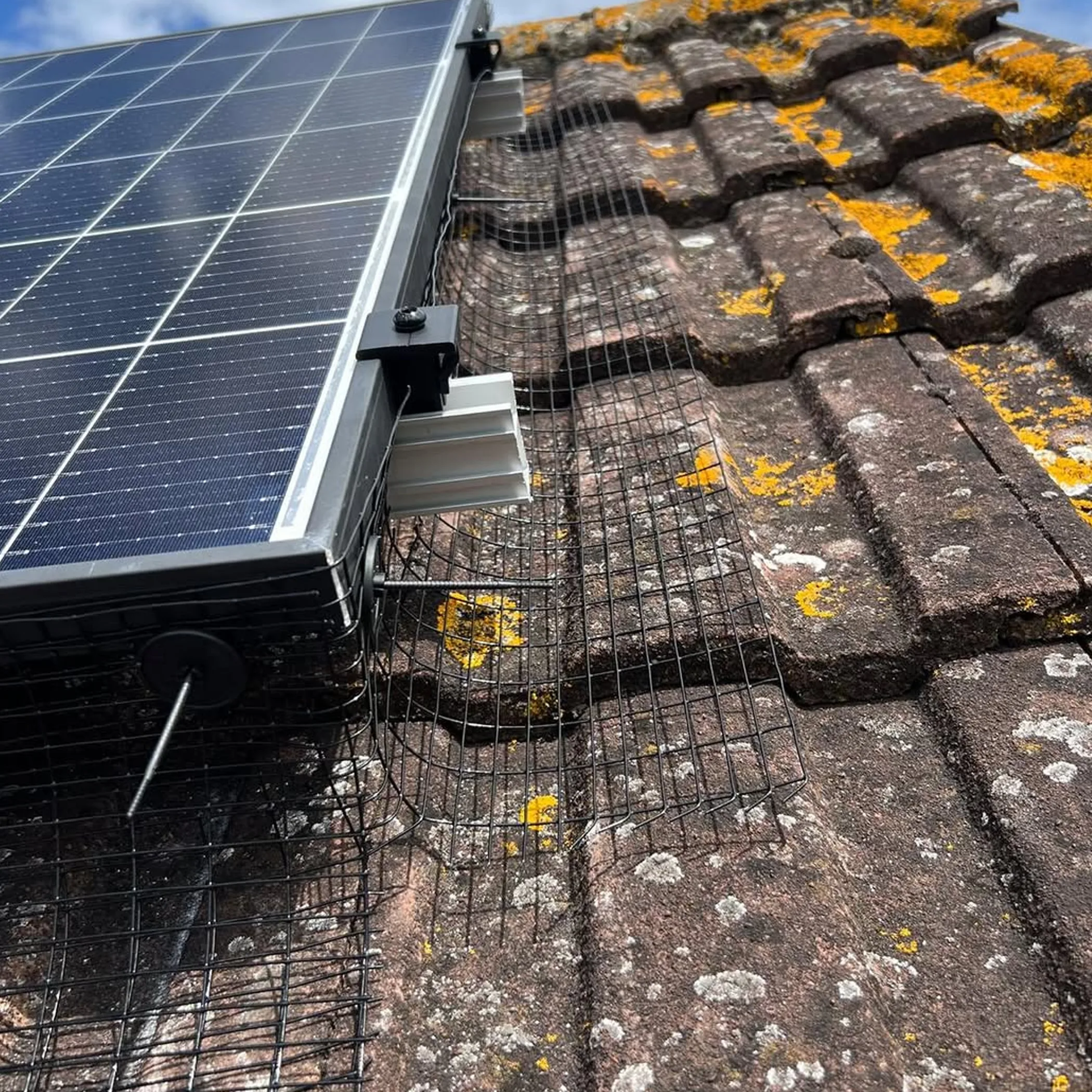
Tilt is more than a figure on an install sheet if the aim is to see better output. It dictates the ease with which dust is shed and how fast a film of grime can form to erode your energy yield. That makes spotting dirt-induced power declines easier. One is surprised at what does not look like much from ground level yet is enough fine soiling to cut into PV production, in particular around the lower edge where muddy deposits make themselves at home.
Common Misconceptions
Most will tell you rainfall is the answer to all problems, which is the first error. Rain can be of assistance to self-cleaning panels provided the mounting angle allows water to sheet off and take the dust with it, as opposed to leaving streaks or build-up at the edges. Then there is the mistake of thinking all dirt is created equal. The red dust of arid country, traffic soot in the suburbs, or the aftermath of a summer’s bushfires do not act the same on glass. Local conditions will determine the strength of the tie between soiling and tilt.
Dust Build Up
In practical terms, roof tilt alters the mechanics of soiling. A steeper pitch is worlds apart from a flat-as-a-pancake roof when it comes to gravity and runoff and the panels show it. Adelaide Crowe has come across tidy systems only to find the mess had made itself in the lip of the lower frame after a passing shower. Not very glamorous but a sure way for a bit of dust to become a soiling loss.
Deposition and Gravity
Low tilt offers little in the way of gravity to dislodge loose particles from the glass. During a dry spell or in the wake of a dust storm or some earthworks, a fine layer will settle and remain. Steeper tilt keeps residence time down for dust; wind and rain have free rein to shift things about. Hence the frequent talk of flat versus tilted panels when it comes to maintenance in these parts.
What The Rain Does
Rainwash is paramount. At a proper angle, sheets of water will run down and lift the dust. Low tilt and the water may bead or pool, putting down its mark when it dries. Paradoxically, a light rain over a low-slope array can be counterproductive, making a paste of the dust before it is left to harden on the glass.
Edge Grime
Many a low-angle system has pooling as a nuisance. Standing water lets sediment collect by the frames and once it is set, nature will not easily clean it. Framed modules are susceptible to this at the bottom. Add in some leaves or bird droppings and the patchy shading and effect on efficiency is more apparent than the rest of the panel would indicate.
Across Australia
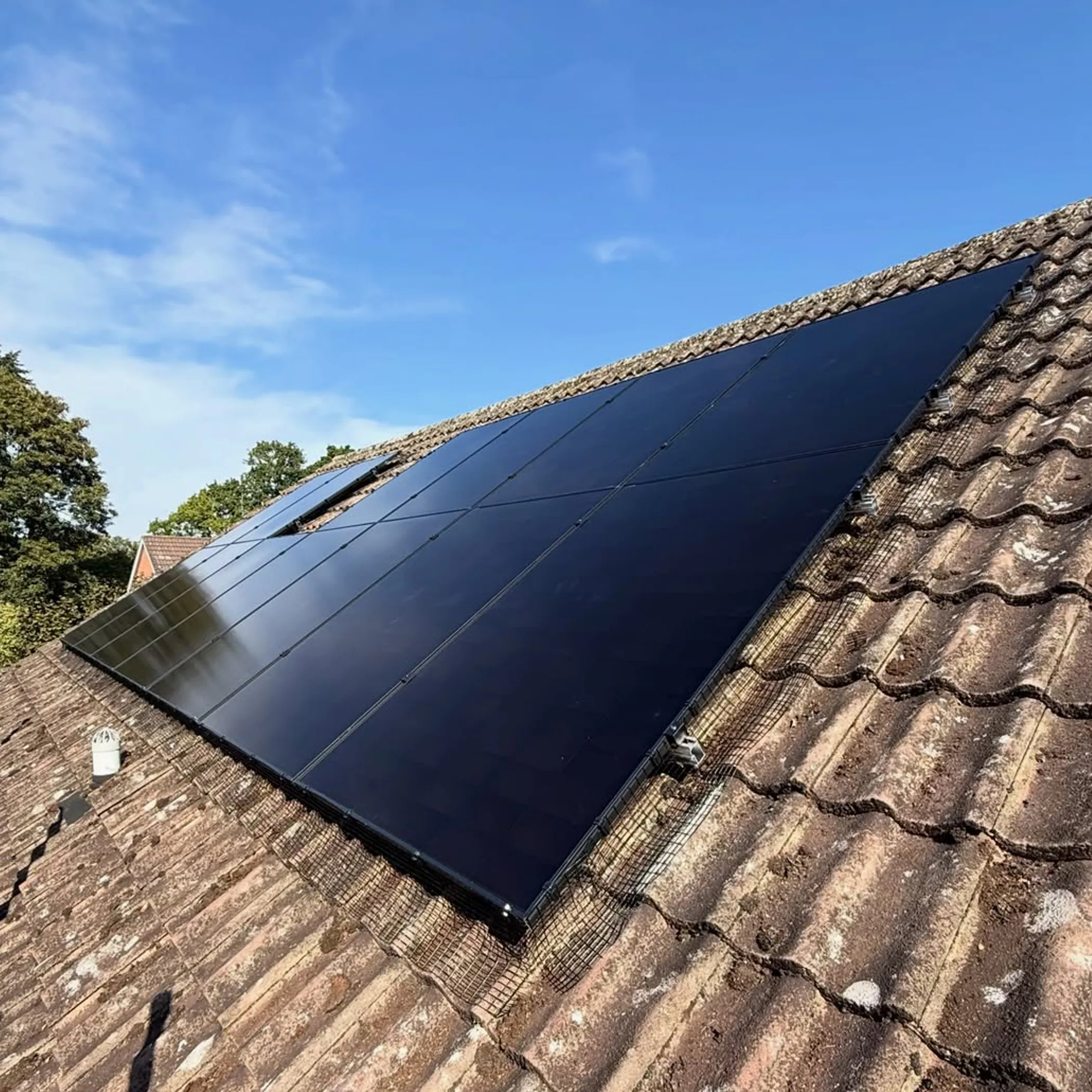
From the Top End to Hobart there is no one tilt angle for a solar panel that will not draw some comment. The practical soiling one encounters is a function of the roof design, wind-blown dust, climate and how it rains.
Yet there are broad regional patterns to be had that are of some use. They put into perspective why a suburban coastal roof in Adelaide might require maintenance at a different rate than a commercial low-slope affair in the outback of South Australia or western NSW.
Southern Cities And Coastal Areas
A moderate tilt is common on the panels of southern cities by virtue of the roof pitch and for the most part this aids rainwash. But an onshore wind in a long dry spell will not have the rain shift the thin residue of salt spray from the coast.
Such a tilt is a good compromise between cleaning and solar access over the year. Salt, pollen and soot tend to be more of a concern than any dust storm, unless a major bushfire has put down smoke as a short-term soiling problem.
Arid And Inland Regions
One finds a different situation in the Red Centre, inland SA and sections of WA and NSW. With less in the way of meaningful rain and more dust in the air, soiling losses on the panels will stand until one puts in the work to clean them.
While heat is what the inland owner would consider the principal foe, it is soiling that can be the more insidious problem, in particular with low-angle arrays in the vicinity of industrial yards, unsealed roads or farms.
Tropical And Northern Conditions
Downpours in the wet season provide a good rinse up north but when the dry comes the build-up is no picnic. A panel may appear to be in order but humidity and organic matter from an occasional storm can leave their mark in the form of film or streaks.
It is a question of seasonality; a system will self-clean in one period and then be holding dust for months in another. The local pattern should dictate how often the solar panels are cleaned, not guesswork.
What The Research Shows
Research is consistent on this: steeper tilt will see less soiling than a near-flat or low-tilt system, if only because of the climate and the dirt in question. Australian conditions bear this out where you cannot count on natural rainwash.
You will find the same conclusion from APVI, Murdoch University, papers on ScienceDirect, commentary from Winkie Energy, field observations by Mackies Group and analysis from Reposit Power, to name a few of the industry and academic sources cited in the sector. Put simply, lower tilt carries a higher risk of having to clean. Since losses are site specific, a forthright installer will not put forward a single figure for all.
Typical Soiling Trend By Tilt
For a practical guide to the kind of operating patterns that prevail in mixed conditions on residential and light commercial systems in Australia, refer to the table below. It is no universal law.
| Panel Tilt Range | Likely Dust Behaviour | Rain Cleaning Effect | Practical Soiling Risk |
|---|---|---|---|
| 0°–5° | Fine dust and edge grime and sediment will remain | Light rain is of little effect, tending to pool | High |
| 6°–15° | A fair bit of build-up in the dry inland | Decent rainfall will do much better | Moderate to High |
| 16°–25° | Many metro roofs shed the dust well | Regular rain is effective | Low to Moderate |
| 26°+ | Not so likely for the dust to stay put | Stronger rainwash | Lower, though not nil |
Do not read these as hard and fast percentages or an alternative to an inspection of the site. An array of 10° next to an unsealed track will get fouled quicker than one of 5° in a more urbane spot with steady rain. Optimal tilt for your Australian solar panels is as much housekeeping as energy geometry.
Losses In Real Terms
There is talk of soiling loss as a percentage of what is expected, but the base is what counts. Take a 30 kWh day: a 5% loss is 1.5 kWh, 10% is 3 kWh.
Seems small enough until weeks go by. For a business or larger home, the underperformance shows up in the monitoring app and the bill, especially with protracted dry weather or dust.
Cleaning Needs By Slope
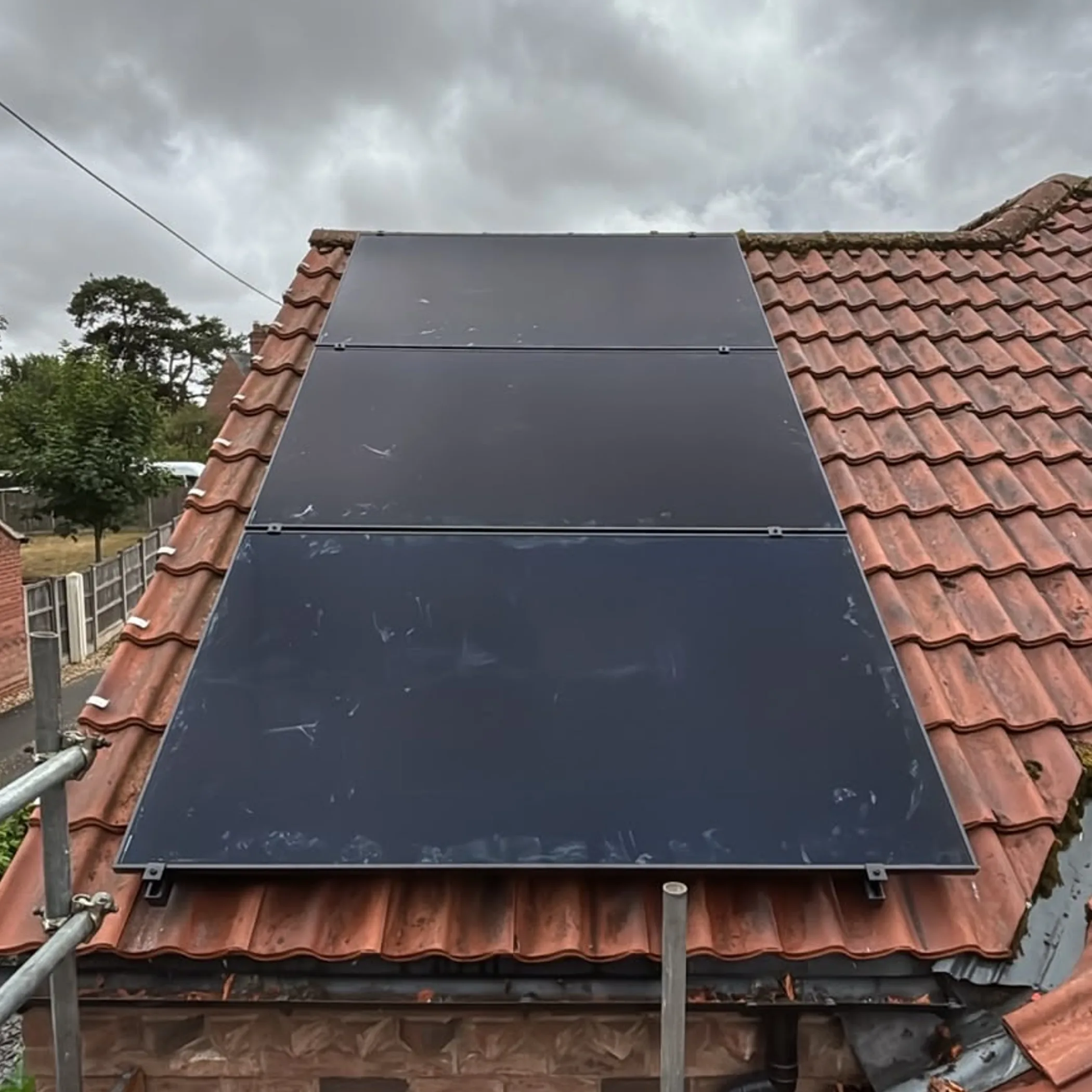
How flat the system is has a bearing on how often it needs attending to. Do not put stock in wishful thinking or a passing shower.
Adelaide Crowe has been known to say that if you have panels with little slope and the likes of bird mess, smoke and dust about, hoping for the next rain is akin to expecting a road train to signal at the proper time. You can wait for it but it is not always prudent.
When Low Tilt Needs Help
A steeper roof will not require the same degree of visual inspection or, in dusty locales, as much cleaning as a low-angle system. The need for it is accentuated in the wake of harvest time, building work in the vicinity, bushfire smoke or a few weeks of drizzle that has not amounted to a good soaking rain.
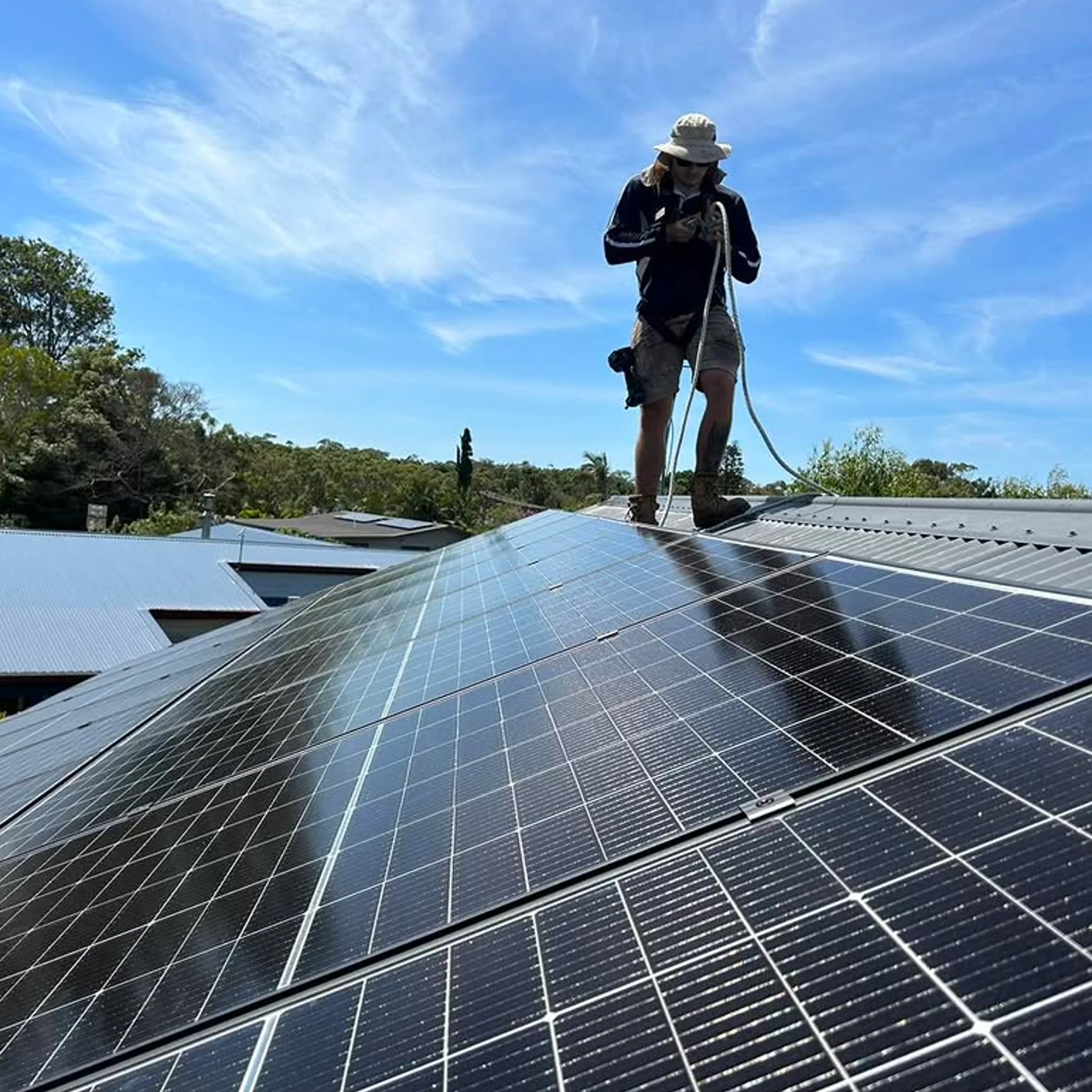
Then there is the matter of safety and Safe Work Australia’s guidance on working safely. Roof work presents an obvious fall hazard so if the roof is high, steep, fragile or access is difficult, one would be wise to put in a call to a professional solar technician or cleaner.
Steeper Roofs: When They Need a Wash
Do not think a steep roof is immune. Smoke fallout, salt residue, sticky pollen and bird droppings will find their way to the panel corners and frames. It is a case of expectation versus reality; while a steep array tends to put off dirt for longer, localised grime can make it underperform. A single corner in bad shape can be more of a nuisance than a light coating over the entire panel.
Design to Avoid Headaches
With a new system, good design should pre-empt the dust. Tilt is not some maths problem to be done in isolation but something to be weighed with orientation, drainage, frame and spacing. Too often the theoretical maximum angle for generation is pursued at the expense of practicality when it comes to cleaning and maintenance. What looks best on paper is not always the answer once you factor in cost and access.
Roof Pitch And Mounting
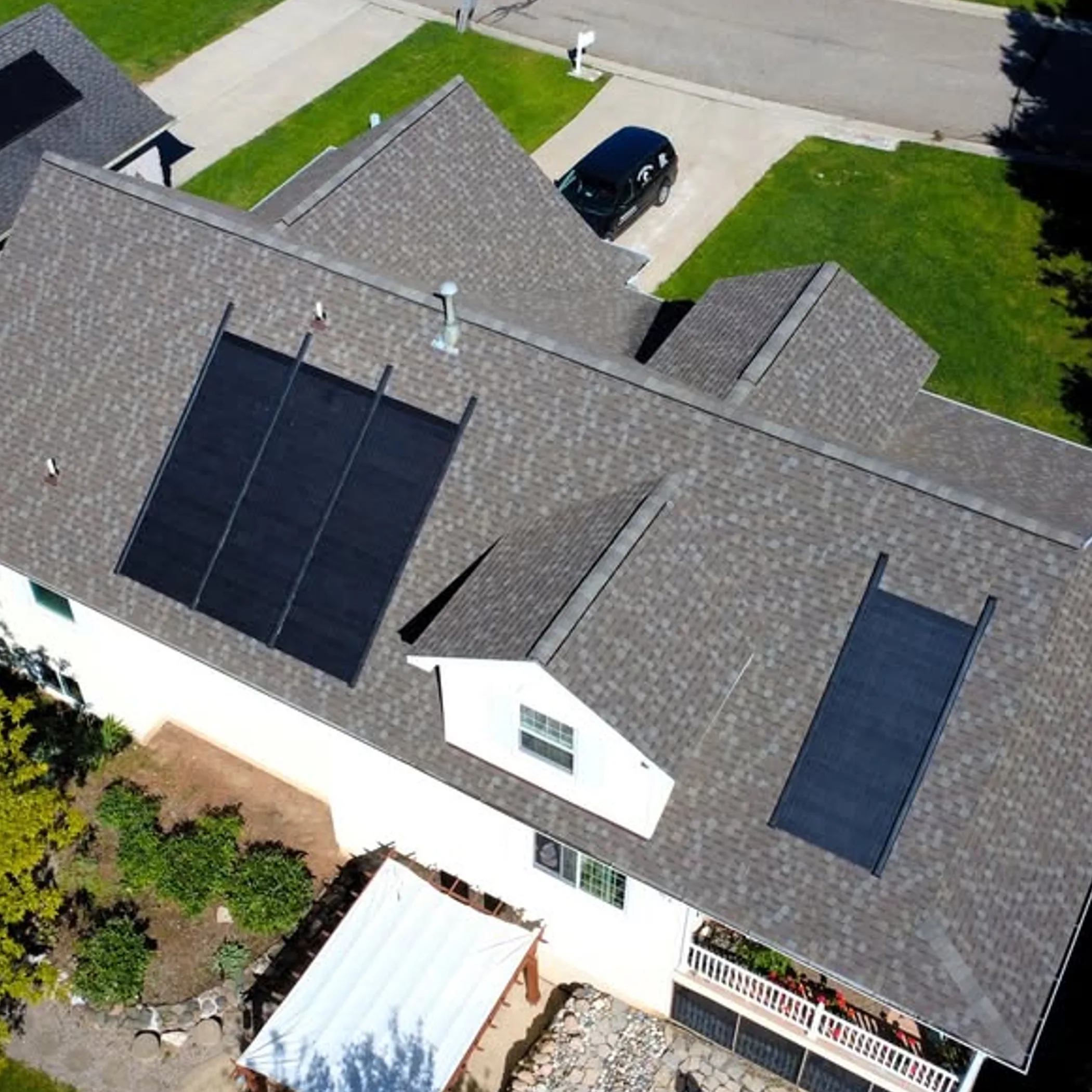
On a home where flush mounting is the norm, the pitch of the roof is usually the first consideration. A moderate pitch will see better natural cleaning than the very low-slope commercial type, unless custom racking and the necessary engineering approvals are in place to change the panel angle.
Some owners will refer to the 20% rule for solar panels, meaning output is still near optimum provided the tilt is within 20 per cent of what is ideal for the site. Take it as a rough guide for planning, not physics, and do not read any soiling risk into it.
Frames, Spacing and Drainage
You want to avoid cramped layouts that hinder runoff and hold debris. Likewise water that does not run free will deposit its residue. The shape of the frame is of consequence too, lower lips have a way of keeping grime. Bifacial modules are another matter; they call for an eye to be kept on rear-side shading and ground conditions but front-surface soiling is no less important. Leave the face of a low-tilt bifacial array to get dirty and you will see some of the expected upside go.
Tracking Your Output
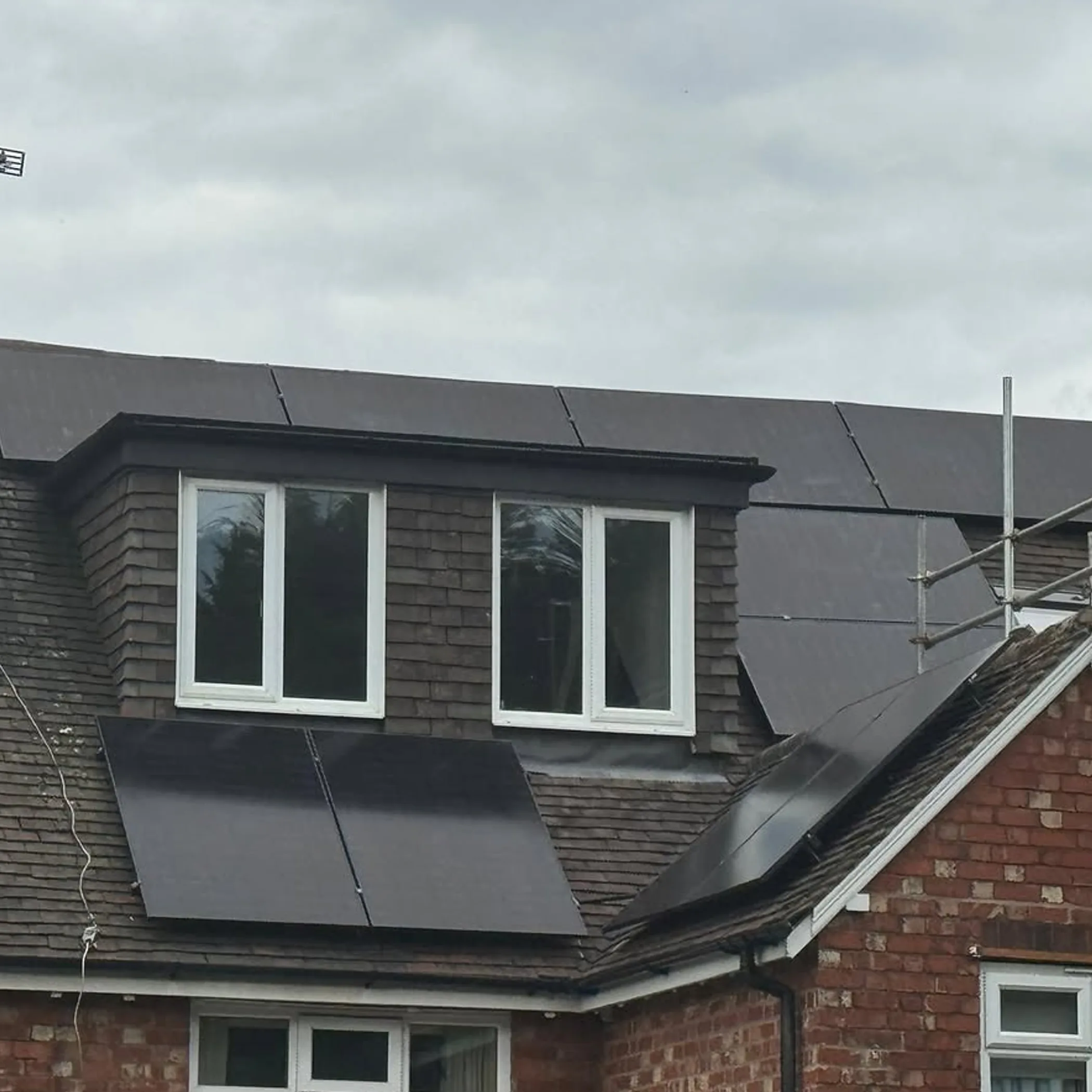
To tell if dirt is taking its toll on production, look at the pattern over a period of time, not just a fine day. An inverter portal or installer report will indicate if the system is deviating from its seasonal norm. That is when you can put to use the notion of a dirt-induced power decline. Should you see a gradual drop in stable weather following a dry windy week or some smoke, it is worth looking into.
Things to Watch For
- A dip in output over a number of clear days against recent normal figures for the season.
- Grime lines or dried splash marks at the lower edge of the panels.
- Any of the usual suspects in the environment such as construction, harvest or dust and a lack of decent rainwash.
- One string or part of the system lagging behind the others, which points to some localised debris or droppings.
If the roof is not to the beginner’s taste and you can see nothing from a safe vantage point on the ground, as your installer would have it, then engage a qualified professional. There is no point in making a maintenance task an emergency room visit.
To Clean or Not
It is not uncommon for a panel to look clean and yet not be up to par, or for a dirty one to not warrant immediate attention. One has to balance the output loss and the costs involved with safety and the likelihood that a proper rain will put right what is wrong. There is no call for most to make of this a full-time pastime. An honest appraisal of your local conditions and some restraint in not putting too much stock in what a light shower will achieve, along with the following guide, will suffice.
Quick Decision Guide
- Panels are lightly dusted and output is as one would expect from the weather of late? Then let it be and have another look after a decent rain.
- A downward trend in output with grime in evidence on the edges or in patches calls for you to put in for an inspection or get them cleaned.
- In arid climes, where there is bushfire smoke or coastal salt spray to contend with, or if unsealed roads are close by, do not put off action.
- And if the roof is steep, high up, fragile or otherwise awkward to get at, leave it to a professional who has the safety controls in place; it is not a job for a DIY approach.
As for cost, any national figure put forward without a source is a furphy. It is hard to put a price on without factoring in the region, how difficult access is and the size of the roof. Often it is the complexity of getting to the panels that sets the price, not the number of them. A low commercial rooftop might be easy enough to reach but requires more regular cleaning.
Who This Advice Is For
Homeowners, property managers and small businesses will find this guidance of use, as will those weighing up flat and tilted arrays under Australian conditions. Of particular relevance where the roof has little pitch, the rain is patchy and the panels are put to dust, salt or smoke.
It is not the kind of one-size-fits-all prescription a utility-scale farm needs, with its robotic cleaners, soiling stations and performance modelling. The scale is different and so is the game.
Adelaide’s Final Word
The blunt truth is that in Australia flatter solar panels are inclined to hold and collect more dust, entailing a greater risk of soiling loss and more maintenance. A steeper tilt will aid in shedding dust and being rained on, though the source of the grime is still very much a factor.
Adelaide Crowe would not make a mystery of it. Make of your roof and design the best practical tilt, monitor the performance and see to cleaning as a matter of maintenance and not conjecture. Your system will then be better placed to deliver on what you have paid for and not be quietly sapped of output by a film of dust.
Frequently Asked Questions
What Is The Best Roof Angle For Solar Panels In Australia?
You will not find a best angle for all of Australia. Latitude is a rough rule of thumb for the ideal tilt if you are thinking generation only, but in the real world one has to take into account the roof itself, shade, wind and soiling. A touch of extra steepness can be of practical advantage in places with little rain or much dust.
What Is The Optimal Tilt Angle For Solar Panels?
That is the angle which strikes a balance between site conditions and annual exposure. Decisions on solar panel tilt in Australia tend to be a compromise between what the roof can bear and the capture of sun. The mathematically optimal may not be the friendliest when it comes to maintenance if there is dust about.
What Is The 20% Rule For Solar Panels?
A planning shortcut of sorts: keep the tilt within 20 per cent of the ideal and the yield should be near maximum. Do not mistake it for proper design though, it does not cover for shading, soiling or the vagaries of local weather.
Is It Better To Tilt Solar Panels Or Flat?
Tilted is generally preferable in Australia for natural cleaning and overall performance. With a flat or near-flat panel you are more likely to have residue lines and the like from low tilt accumulation. Some flat-roof systems work well enough provided the racking and drainage are right and you have a maintenance plan.
How Often Should Solar Panels Be Cleaned In Australia?
It is a question of location and tilt. A suburban roof of moderate tilt and some regular rain will not want for manual cleaning. But an array of low angle in the dusty inland or on the coast will warrant more frequent attention and perhaps a professional now and then. Let a decline in output and what you can see on the panel be your guide, not the calendar.
